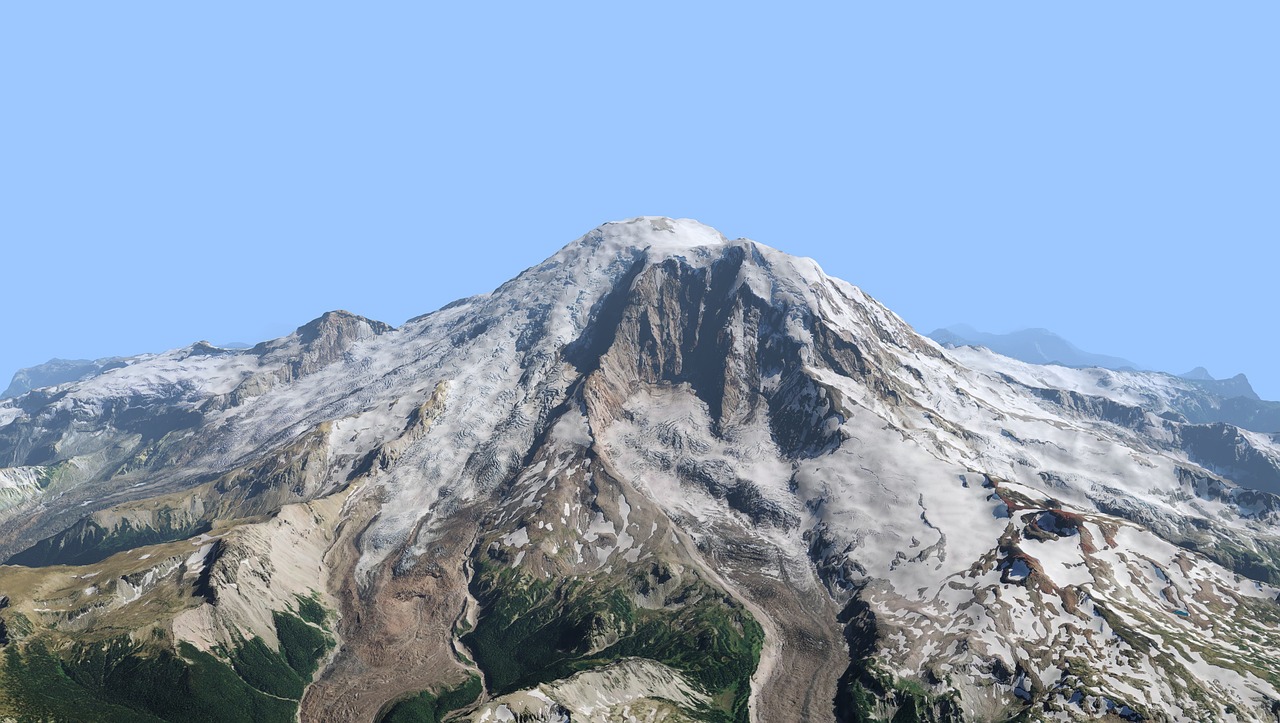
Beneath the lush forests and vibrant cities of the Pacific Northwest, an invisible battle of titanic proportions is unfolding. This isn't a conflict of human design, but a relentless geological struggle within the Cascadia Subduction Zone. For decades, scientists have known that this fault, stretching from northern California to British Columbia, is capable of producing some of the planet's most devastating earthquakes – 'megathrust' events that can rival the scale of the 2011 Tohoku earthquake in Japan. What’s becoming clearer is that the quietest moments along this fault, known as 'silent slips,' are not periods of calm, but crucial indicators of immense seismic tension building below.

Introduction to Earth Science
The Cascadia Subduction Zone (CSZ), stretching from northern California to British Columbia, is a seismic enigma, a sleeping giant capable of producing devastating megathrust earthquakes. Unlike its highly active counterparts around the Pacific Ring of Fire, Cascadia has been seismically quiet for over 300 years, lulling the Pacific Northwest into a false sense of security while immense stress quietly accumulates. Central to understanding this silent accumulation is a phenomenon known as 'silent slip' or Slow Slip Events (SSEs) – slow, aseismic movements along the deep portion of the subduction interface. These events, imperceptible to humans, are revealing critical insights into how the megathrust fault stores and redistributes seismic tension, influencing the timing and characteristics of future 'big one' ruptures.
Overview: The Enigma of Cascadia's Seismic Silence
The Cascadia Subduction Zone represents a convergent plate boundary where the oceanic Juan de Fuca, Gorda, and Explorer plates are diving eastward beneath the North American continental plate. This colossal geological process is typically characterized by frictional locking along the plate interface, leading to the elastic deformation of the overriding plate and the eventual, violent release of accumulated stress in megathrust earthquakes. Cascadia's last major event, the magnitude 9 Cascadia earthquake of 1700, produced a massive tsunami that impacted indigenous communities and left geological evidence across the region. The modern challenge lies in deciphering the current state of stress accumulation, particularly how deep processes, like SSEs, influence the seismic potential of the shallower, locked zone.
Silent slip events were first definitively identified in Cascadia in the early 2000s, revolutionizing our understanding of subduction zone behavior. These events involve a gradual, episodic movement of the fault over weeks to months, releasing strain equivalent to a magnitude 6.5-7.0 earthquake, but without generating detectable seismic waves. Instead, their subtle signatures are picked up by highly sensitive geodetic instruments. The profound implication is that these 'silent' movements are not merely curiosities; they are actively modulating the stress landscape of the megathrust, potentially loading the shallower, fully locked portion of the fault that threatens the Pacific Northwest's major population centers.
Principles & Laws: The Geophysics Governing Subduction
Plate Tectonics and Subduction Dynamics
At the heart of Cascadia's seismic activity is the fundamental principle of plate tectonics. The Juan de Fuca plate, a fragment of the larger Pacific plate, moves inexorably eastward, subducting beneath the North American plate. This process creates the Cascadia megathrust fault, a vast interface where tremendous forces converge. The angle and rate of subduction, coupled with the properties of the intervening sediments and crustal rocks, dictate the frictional behavior of the fault. The colder, shallower parts of the fault tend to be strongly 'locked,' accumulating stress. Deeper, hotter parts exhibit more plastic, aseismic deformation.
Elastic Rebound Theory
The accumulation and release of seismic tension are governed by the elastic rebound theory. As tectonic plates move, they deform the rock along the fault boundary. This deformation stores elastic energy, much like stretching a spring. When the stress exceeds the frictional strength of the fault, the rocks snap back to their original shape, releasing the stored energy as seismic waves – an earthquake. In Cascadia, the overriding North American plate is currently being compressed and uplifted, storing elastic energy that will be released during the next megathrust event.
Frictional Mechanics and Rate-and-State Friction
The behavior of fault surfaces is critically dependent on frictional mechanics. Faults can exhibit stable sliding (creep), stick-slip behavior (earthquakes), or a transitional regime. The deeper understanding of these behaviors comes from rate-and-state friction laws, which describe how friction on a fault surface changes with sliding velocity and how it evolves with time due to microscopic changes at the contact interface. These laws help explain why some parts of the fault creep continuously, others host SSEs, and still others remain locked until a major earthquake. The transition zone, where SSEs occur, is often characterized by a delicate balance where frictional strength is rate-weakening but not sufficiently so to cause dynamic rupture.
The Seismic Cycle
The seismic cycle encompasses the entire process from the inter-seismic period (stress accumulation), through co-seismic rupture (earthquake), to post-seismic relaxation. Understanding SSEs is crucial for refining our models of this cycle in subduction zones. While traditional models focused on a binary state (locked vs. creeping), SSEs demonstrate a more nuanced, dynamic behavior in the transitional zone, highlighting the complexity of stress transfer and release.
Methods & Experiments: Probing the Silent Earth
Detecting and characterizing silent slip events requires sophisticated observational techniques capable of resolving minute ground deformations and subtle seismic signals.
Geodetic Monitoring
GPS/GNSS Networks
The primary tool for detecting SSEs is high-precision Global Positioning System (GPS), now part of the broader Global Navigation Satellite Systems (GNSS). Continuous GPS stations deployed across the Pacific Northwest measure ground displacements with millimeter accuracy. During an SSE, these stations record a distinctive, slow reversal of crustal motion. The cumulative displacement over weeks to months allows scientists to precisely map the spatial extent, magnitude, and duration of the silent slip event. Sophisticated data processing techniques are essential to isolate these subtle tectonic signals from noise generated by atmospheric effects, hydrological loading, and instrument instabilities.
Strainmeters and Tiltmeters
In-situ strainmeters and tiltmeters provide even more localized and sensitive measurements of crustal deformation. Buried deep underground, these instruments can detect minute changes in rock strain or surface tilt, offering complementary data to GPS, particularly in detecting the onset and propagation of SSEs.
Seismic Monitoring
Seismometer Networks and Non-Volcanic Tremor (NVT)
While SSEs themselves are aseismic, they are often accompanied by episodes of Non-Volcanic Tremor (NVT). NVT consists of very low-amplitude, long-duration seismic signals, distinct from typical earthquake 'shaking.' These tremors are thought to be generated by fluids migrating through the fault zone or by an ensemble of tiny, low-frequency earthquakes occurring simultaneously. Extensive networks of broadband seismometers, both on land and increasingly offshore (Ocean Bottom Seismometers or OBS), are crucial for detecting and locating NVT, which acts as a proxy for the spatial and temporal evolution of underlying SSEs.
Geophysical Imaging
Seismic Reflection and Refraction
Imaging the deep structure of the subduction zone, particularly the fault interface itself, is achieved through seismic reflection and refraction surveys. These techniques use acoustic waves to create detailed subsurface images, revealing the geometry of the megathrust, the presence of fluids, and variations in rock properties that influence frictional behavior. Such imaging helps delineate the boundaries between locked, transitional, and creeping sections of the fault.
Magnetotellurics (MT)
Magnetotellurics measures variations in Earth's natural electromagnetic fields to map electrical resistivity anomalies at depth. High conductivity zones are often indicative of fluids (e.g., water, molten rock) or highly fractured rocks. Fluids play a critical role in fault lubrication and can significantly reduce frictional strength, potentially contributing to the conditions that enable SSEs and tremor.
Laboratory Experiments
Laboratory experiments on rock friction under simulated fault conditions (high pressure, temperature, and fluid presence) provide fundamental insights into the physical mechanisms governing stick-slip behavior and stable sliding. These experiments help constrain the rate-and-state friction parameters used in numerical models of subduction zones and SSEs.
Data & Results: The Unveiling of Silent Slip
The robust application of these methods has yielded transformative data regarding Cascadia's SSEs.
Detection and Characteristics of SSEs
Since their initial discovery, regular SSEs have been identified across the CSZ, recurring roughly every 13-15 months in southern Cascadia (Washington, northern Oregon) and every 20-24 months in northern Cascadia (southern Vancouver Island). Each event typically lasts for several weeks, involves a few centimeters of slip, and occurs at depths between 25-45 km, corresponding to the downdip transition zone between the locked megathrust and the fully ductile lower crust. The cumulative slip from these events can be significant over decades, indicating a substantial release of strain that would otherwise contribute to seismic events.
Relationship to Non-Volcanic Tremor (NVT)
A remarkable finding is the close spatial and temporal correlation between SSEs and NVT. Tremor bursts typically accompany and often delineate the propagation of silent slip. This correlation strongly suggests that tremor is a direct manifestation of the underlying aseismic slip process, likely triggered by transient fluid pressure variations or swarms of ultra-low frequency earthquakes within the slip zone. The episodic nature of tremor provides a real-time indicator of when and where SSEs are occurring.
Stress Perturbations and Megathrust Loading
One of the most crucial results from SSE research is the demonstration that these events redistribute stress along the megathrust. As the deep part of the fault slowly slips, it can increase stress on the adjacent, shallower, fully locked section of the megathrust. While individual SSEs represent a release of strain, their cumulative effect can be viewed as incrementally loading the seismogenic zone, nudging it closer to rupture. Sophisticated numerical models, informed by geodetic observations, simulate this stress transfer, showing how SSEs perturb the stress field and potentially shorten the recurrence interval of great earthquakes or influence their rupture characteristics.
Modeling SSEs
Computational models integrate geodetic and seismic data with laboratory-derived friction laws to simulate SSEs. These models investigate various parameters, such as pore fluid pressure, frictional heterogeneity, and plate kinematics, to understand the conditions conducive to silent slip. They are instrumental in predicting how SSEs might interact with the locked zone and their broader implications for the seismic cycle.
Applications & Innovations: Towards Enhanced Hazard Assessment
The unraveling of silent slip phenomena has profound implications for earthquake hazard assessment and our broader understanding of subduction zone behavior.
Improved Seismic Hazard Assessment
By providing a more dynamic view of stress accumulation and release, SSE research allows for refined probabilistic seismic hazard assessments. While SSEs are not direct precursors to megathrust earthquakes, understanding their frequency, magnitude, and spatial interaction with the locked zone helps calibrate models of future earthquake scenarios. This leads to more accurate estimates of earthquake recurrence intervals and potential ground motion, which is vital for engineering resilient infrastructure.

Advancing Early Warning Systems (Future Potential)
Currently, SSEs do not offer short-term earthquake prediction capabilities. However, continued monitoring of SSEs, particularly their interaction with the downdip edge of the locked zone, could contribute to a more comprehensive real-time picture of the subduction zone's stress state. Future innovations in geodetic and seismic networks, combined with advanced data analysis, might reveal subtle changes in SSE characteristics that could be associated with elevated risk, though this remains a long-term research goal.
Global Applications
The lessons learned from Cascadia's SSEs are being applied globally to other subduction zones, such as Nankai (Japan), Sumatra, and Chile. The discovery of SSEs in Cascadia spurred similar observations worldwide, establishing them as a common mode of deformation in many subduction systems. This comparative planetology of fault behavior is enhancing our understanding of diverse plate boundaries.
Public Preparedness and Education
Communicating the complexities of silent slip and its implications for megathrust earthquakes is crucial for public preparedness in the Pacific Northwest. Scientists and emergency managers use this research to educate communities about the long-term seismic threat, encouraging mitigation efforts like retrofitting buildings and developing comprehensive disaster plans.
Key Figures: Collaborative Science at Work
Research into Cascadia's silent slip events is a testament to large-scale, collaborative science. Geodesists, seismologists, geodynamicists, and marine geophysicists from institutions like the U.S. Geological Survey (USGS), Natural Resources Canada (NRCan), and numerous universities across the Pacific Northwest (e.g., University of Washington, Oregon State University, University of Victoria) have been instrumental. Their collective efforts in deploying and maintaining extensive monitoring networks and developing sophisticated analytical techniques have driven this field forward.
Ethical & Societal Impact: Preparing for the Unseen
The ethical and societal implications of understanding Cascadia's megathrust threat, including the role of SSEs, are substantial.
Public Safety and Infrastructure
Accurate hazard assessment directly informs building codes, land-use planning, and the design of critical infrastructure (bridges, hospitals, power grids). Knowing the potential for a magnitude 9 earthquake necessitates robust societal preparations, which are expensive and require long-term political will.
Economic Preparedness
The economic impact of a major Cascadia earthquake would be catastrophic. Understanding the full scope of the threat, including how SSEs contribute to stress accumulation, allows for better economic planning, insurance modeling, and resilience strategies to minimize financial disruption.
Science Communication
Effectively communicating complex scientific uncertainties, like the precise role of SSEs in earthquake timing, to the public and policymakers without causing undue alarm or complacency is a significant ethical challenge. Clear, consistent messaging is vital for fostering informed preparedness.
Current Challenges: Unanswered Questions and Technical Hurdles
Despite significant progress, several challenges remain in fully unraveling the mysteries of silent slip.
Predicting Megathrust Earthquakes
The holy grail of earthquake science – prediction – remains elusive. While SSEs offer insights into stress accumulation, they are not direct precursors to great earthquakes, and their exact relationship to the ultimate rupture initiation of the locked zone is still poorly understood. Scientists are wary of overstating any predictive capabilities.
Imaging the Deep Fault Zone
Achieving high-resolution imaging of the fault zone's physical properties (e.g., fluid content, temperature, rock type, stress state) at the depths where SSEs occur (25-45 km) remains technically challenging. Conventional seismic imaging has limitations at these depths.
Offshore Monitoring
A significant portion of the Cascadia megathrust, especially the locked zone, lies offshore. Deploying and maintaining extensive networks of OBS and seafloor geodetic instruments is incredibly expensive and technically demanding, creating data gaps in critical areas.
Complexity and Variability of SSEs
SSEs themselves exhibit complexity and variability. Their size, duration, recurrence interval, and precise location can vary, and not all SSEs are accompanied by the same tremor characteristics. Unraveling this variability and its implications for stress transfer is an ongoing challenge.
Long-Term Data Gaps
The observational record for SSEs is relatively short (a couple of decades) compared to the centuries-long seismic cycle of megathrust earthquakes. Long-term monitoring and analysis are needed to understand their full significance.
Future Directions: Pushing the Boundaries of Discovery
Future research will focus on overcoming current limitations and deepening our understanding.
Enhanced Offshore Observatories
Investment in next-generation seafloor geodetic networks (e.g., cabled observatories, autonomous seafloor GPS systems) will be critical to bridge the offshore data gap and provide continuous, high-resolution measurements of crustal deformation directly above the locked zone.
Integrated Geodynamic Modeling
Developing more sophisticated, physics-based geodynamic models that integrate all available geodetic, seismic, and geological data will be essential. These models will aim to simulate the entire seismic cycle, including the interaction between SSEs, tremor, and dynamic rupture, with greater fidelity.
Machine Learning and Artificial Intelligence
Applying advanced data analytics, machine learning, and AI techniques to the vast datasets from geodetic and seismic networks could reveal subtle patterns and correlations in SSEs and tremor that are currently missed by traditional analysis methods, potentially leading to new insights into fault behavior.
Scientific Drilling
Future scientific ocean drilling projects into the subduction interface are envisioned to sample fault rocks, measure in-situ stress, fluid pressure, and temperature directly. This 'ground truth' data would be invaluable for calibrating laboratory experiments and numerical models.
Interdisciplinary Approaches
Fostering even greater interdisciplinary collaboration among geophysicists, geologists, fluid dynamicists, and materials scientists will be key to unlocking the remaining mysteries of subduction zone seismicity and silent slip.
Conclusion: The Silent Watch Continues
The unraveling of silent slip events in the Cascadia Subduction Zone represents a profound leap in earthquake science. These subtle, aseismic movements are not passive bystanders but active participants in the complex dance of stress accumulation and release along the megathrust. By meticulously monitoring and modeling SSEs, scientists are gaining unprecedented insights into how Cascadia's 'silent' megathrust stores immense seismic tension, inching closer to understanding the mechanisms that will ultimately govern the timing and magnitude of its next great earthquake. While the 'big one' remains unpredictable, every silent slip detected brings us a step closer to understanding the Earth's profound, slow rhythms and better preparing the communities living in the shadow of this seismic giant. The silent watch continues, driven by relentless scientific inquiry and an unwavering commitment to public safety.