
At the very heart of our spiral galaxy, the Milky Way, lies a cosmic behemoth—a supermassive black hole known as Sagittarius A* (Sgr A*). For decades, this gravitational titan remained largely a mystery, its secrets shrouded by vast swathes of interstellar dust and gas. Yet, a new era of astronomical observation, marked by groundbreaking instruments and collaborative global efforts, is finally pulling back the veil, offering unprecedented glimpses into its nature and the extreme physics that govern our galactic core.
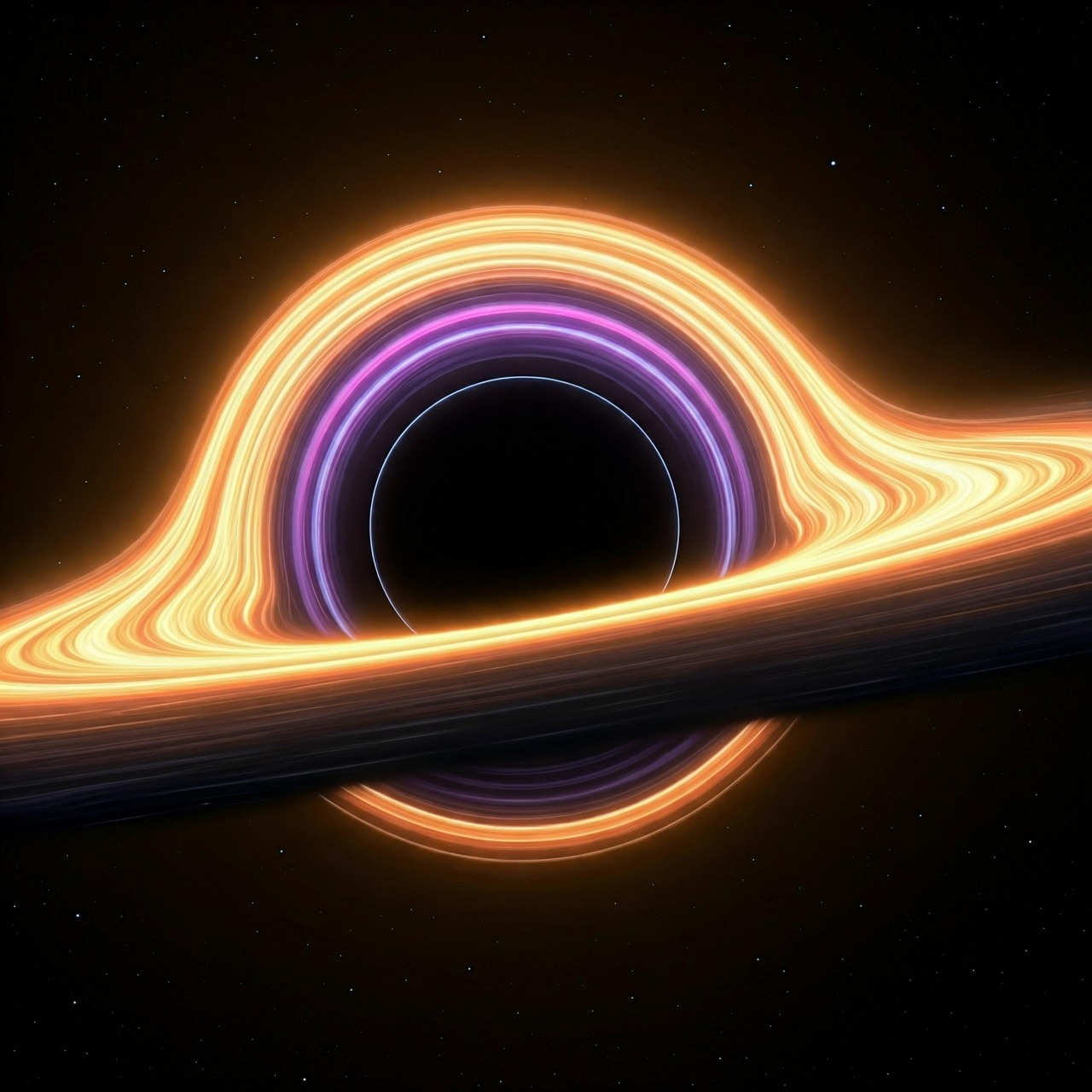
For centuries, the celestial sphere has been an endless source of wonder, inspiring humanity to gaze upwards and ponder our place in the cosmos. Among the most profound revelations of modern astronomy is the existence of black holes – regions of spacetime where gravity is so intense that nothing, not even light, can escape. At the very heart of our own Milky Way galaxy resides a supermassive black hole, an enigmatic entity known as Sagittarius A* (Sgr A*). For decades, Sgr A* remained an invisible behemoth, its presence inferred solely by the gravitational ballet of stars orbiting an unseen mass. However, recent groundbreaking advancements, spearheaded by the Event Horizon Telescope (EHT) and the GRAVITY instrument, have propelled us into an unprecedented era of direct observation, allowing us to unmask this galactic enigma and probe the most extreme laboratory of gravity in the universe.
Overview: The Heart of Darkness Illuminated
Sagittarius A* is the supermassive black hole (SMBH) located approximately 26,000 light-years from Earth, at the dynamical center of the Milky Way galaxy. With a mass estimated to be around 4.3 million times that of our Sun, Sgr A* exerts an overwhelming gravitational influence on its surroundings, dictating the orbits of stars, gas, and dust in its immediate vicinity. Despite its immense mass, Sgr A* is relatively quiescent compared to the active galactic nuclei (AGN) found in many other galaxies, which often feature powerful jets and brilliant accretion disks. This relative tranquility, while posing observational challenges due to its faintness, also offers a unique opportunity to study a 'cleaner' black hole environment, less obscured by violent outflows. The quest to image Sgr A*'s event horizon – the boundary beyond which return is impossible – and to precisely measure its properties has been a grand challenge for astrophysics, promising to test the limits of Einstein's General Theory of Relativity and deepen our understanding of black hole physics and galaxy evolution.
Principles & Laws: The Theoretical Underpinnings
General Relativity and Black Holes
The theoretical framework for understanding black holes stems directly from Albert Einstein's General Theory of Relativity, published in 1915. This revolutionary theory posits that gravity is not a force but a manifestation of the curvature of spacetime caused by mass and energy. Black holes represent the ultimate extreme of this curvature. Key concepts derived from General Relativity crucial to Sgr A* studies include:
- Event Horizon: The boundary in spacetime around a black hole beyond which events cannot affect an outside observer. For a non-rotating black hole, this is the Schwarzschild radius. For a rotating (Kerr) black hole, the structure is more complex, involving an ergosphere where spacetime itself is dragged.
- Singularity: The theoretical point of infinite density and spacetime curvature at the center of a black hole, where current physics breaks down.
- Gravitational Lensing: The bending of light rays by massive objects. Near a black hole, this effect is extreme, distorting the appearance of light emitted from the accretion disk and creating a 'shadow' – an apparent deficit of light against a brighter background of emission from matter falling into the black hole.
Accretion Physics and Radiation
While black holes themselves emit no light (except for theoretical Hawking radiation, which is far too faint to detect), the matter that falls into them does. As gas and dust spiral inwards, they form an accretion disk, heating up to extreme temperatures due to friction and compression. This superheated plasma emits radiation across the electromagnetic spectrum, from radio waves to X-rays. The observed radiation from Sgr A* primarily comes from this optically thin, geometrically thick accretion flow, along with occasional flares. Understanding the dynamics of these accretion flows is vital for interpreting the observed images and spectra.
Methods & Experiments: Probing the Galactic Core
The Event Horizon Telescope (EHT)
To resolve the minuscule angular size of Sgr A*'s event horizon (equivalent to an orange on the Moon), an Earth-sized telescope is required. The Event Horizon Telescope achieves this through Very Long Baseline Interferometry (VLBI), a technique that links radio observatories worldwide to create a virtual telescope dish as large as the Earth. Telescopes from Hawaii, Arizona, Mexico, Chile, Spain, and Antarctica (among others) simultaneously observe radio waves at millimeter and submillimeter wavelengths. Atomic clocks precisely timestamp the incoming signals, and the data is later correlated at supercomputing centers. This synthesis of signals allows the EHT to achieve unprecedented angular resolution, capable of resolving structures just tens of microarcseconds across. The EHT's primary goal is to directly image the 'shadow' cast by the black hole, a dark region against the bright backdrop of emitted radiation, whose size and shape are predicted by General Relativity.
The GRAVITY Instrument (VLTI)
Complementary to the EHT's imaging efforts, the GRAVITY instrument on the European Southern Observatory's (ESO) Very Large Telescope Interferometer (VLTI) in Chile specializes in tracking the orbits of stars incredibly close to Sgr A*. GRAVITY combines the light from all four 8.2-meter Unit Telescopes of the VLT using infrared interferometry and adaptive optics, achieving the sensitivity and angular resolution (in the milliarcsecond range) needed to precisely measure the positions of stars in the S-cluster, a group of stars orbiting Sgr A* with periods as short as a few years. The most famous of these is S2 (also known as S0-2), whose highly elliptical orbit takes it within 17 light-hours of the black hole. By precisely monitoring S2's trajectory, GRAVITY can test General Relativity in the strong gravitational field near Sgr A* and measure its mass and distance with unparalleled accuracy.
Multi-wavelength Observations
Beyond radio interferometry, Sgr A* is also observed across the electromagnetic spectrum. X-ray telescopes like Chandra and NuSTAR detect high-energy flares, providing insights into particle acceleration and heating processes near the black hole. Infrared telescopes (e.g., Keck, VLT) track stellar motions and the dynamics of gas clouds. These multi-wavelength campaigns offer a comprehensive picture of the complex environment around Sgr A*, helping to constrain theoretical models of accretion and outflow.
Data & Results: Unveiling the Invisible
The EHT's Image of Sgr A*
On May 12, 2022, the Event Horizon Telescope Collaboration unveiled the first-ever image of Sgr A*. Following the landmark image of M87* in 2019, the Sgr A* image revealed a glowing, fuzzy ring of light surrounding a dark central region – the black hole's shadow. This ring, with a diameter of approximately 52 microarcseconds (roughly the size of Mercury's orbit around the Sun), closely matches predictions from General Relativity for a 4-million-solar-mass black hole. The asymmetry in brightness within the ring is thought to be due to Doppler beaming, where gas moving towards the observer appears brighter than gas moving away. The observation of this shadow provides powerful direct evidence for the existence of an event horizon and offers a visual confirmation of the extreme spacetime curvature predicted by Einstein. The Sgr A* image was particularly challenging due to the black hole's rapid variability; the gas orbiting Sgr A* completes a full rotation in mere minutes, requiring sophisticated data processing to account for changes during the observation period.
GRAVITY's Stellar Orbits and Relativity Tests
The GRAVITY instrument has yielded a treasure trove of data from the S-cluster. Its precise tracking of star S2's orbit has allowed scientists to:

- Confirm Sgr A*'s Mass and Distance: By meticulously observing S2's elliptical path, GRAVITY has refined the mass of Sgr A* to 4.297 ± 0.013 million solar masses and its distance to 8.275 ± 0.009 kiloparsecs.
- Detect Relativistic Effects: During S2's closest approach to Sgr A* in May 2018 (its pericenter), GRAVITY detected a subtle but definitive relativistic redshift in the star's light, consistent with the predictions of General Relativity. This was the first time such a gravitational redshift was measured for a star orbiting an SMBH.
- Observe Schwarzschild Precession: Further observations by GRAVITY and other instruments confirmed the Schwarzschild precession of S2's orbit, where the pericenter of the ellipse shifts slightly with each orbit, a phenomenon also predicted by General Relativity and previously observed in the orbit of Mercury around the Sun, but far more pronounced in S2's extreme environment.
- Constrain Black Hole Spin: While not yet directly measured, GRAVITY's data, combined with EHT observations and theoretical models, helps place constraints on Sgr A*'s spin parameter, suggesting it might be relatively low compared to more active black holes.
Applications & Innovations: Beyond Observation
Testing General Relativity in Extreme Environments
Sgr A* serves as an unparalleled natural laboratory for testing General Relativity in its strongest regime. The highly curved spacetime near the event horizon and the swift orbital velocities of stars like S2 provide unique opportunities to search for deviations from Einstein's theory, potentially hinting at new physics beyond the standard model. The consistency of EHT images and GRAVITY's orbital measurements with relativistic predictions reinforces our confidence in General Relativity, yet the quest for any subtle discrepancy continues.
Astrophysical Insights and Galaxy Evolution
Understanding Sgr A*'s properties and its interactions with its surroundings is crucial for comprehending the co-evolution of supermassive black holes and their host galaxies. Although Sgr A* currently exhibits low activity, studying its accretion mechanisms, magnetic fields, and occasional flaring events offers clues about the feeding habits of SMBHs and how they might have influenced the formation and growth of the Milky Way over cosmic time. These observations also inform models of jet formation, even if Sgr A* lacks a powerful jet, helping to understand why some black holes launch them while others do not.
Technological Advancements
The success of the EHT and GRAVITY projects relies on cutting-edge technological innovation. VLBI requires precise clock synchronization across continents, massive data storage and correlation capabilities, and sophisticated computational imaging algorithms. Adaptive optics, a core component of GRAVITY, compensates for atmospheric distortions, enabling sharper images and more precise measurements from ground-based telescopes. These advancements push the boundaries of engineering and signal processing, with potential spin-off applications in other fields.
Key Figures: Pioneers in the Dark
The journey to unmask Sgr A* has involved generations of brilliant minds:
- Albert Einstein: The architect of General Relativity, providing the theoretical foundation for black holes.
- Karl Schwarzschild: First to derive a solution for Einstein's field equations describing a non-rotating black hole, defining the Schwarzschild radius.
- Roger Penrose: Awarded the Nobel Prize for his mathematical work proving that black hole formation is a robust prediction of General Relativity.
- Reinhard Genzel & Andrea Ghez: Jointly awarded the Nobel Prize for their pioneering work using infrared astronomy and adaptive optics to track the orbits of stars around Sgr A*, definitively proving the existence of a supermassive compact object at the galactic center.
- Shep Doeleman & Heino Falcke: Key figures in the Event Horizon Telescope collaboration. Doeleman led the EHT project, and Falcke conceptualized the idea of imaging a black hole's shadow.
Ethical & Societal Impact: The Pursuit of Knowledge
While the study of black holes might seem esoteric, the pursuit of such fundamental science has profound ethical and societal implications. It represents humanity's innate drive to understand the universe and our place within it. The international collaborations behind projects like EHT and GRAVITY exemplify how global scientific cooperation can overcome immense technical and logistical challenges for the common good of knowledge. This research inspires new generations of scientists, fosters critical thinking, and contributes to a culture of evidence-based reasoning. The images and discoveries resonate deeply with the public, sparking wonder and reinforcing the value of investing in basic research, even when immediate practical applications are not obvious.
Current Challenges: The Road Ahead
Despite the recent triumphs, significant challenges remain in the study of Sgr A*:
- Variability: Sgr A*'s accretion flow is highly dynamic, changing on timescales of minutes to hours. This rapid variability makes imaging challenging, as the structure observed by the EHT is essentially a time-averaged 'smear'. Capturing sharper, real-time 'movies' of the event horizon requires more sensitive telescopes and continuous monitoring.
- Interstellar Scattering: The intervening plasma between Sgr A* and Earth causes significant scattering of radio waves, blurring the image. While techniques exist to mitigate this, it remains a limiting factor for resolution.
- Data Processing: The sheer volume of data generated by global VLBI arrays and the complex algorithms needed to reconstruct images from sparse data points pose substantial computational demands.
- Black Hole Spin Measurement: Accurately measuring the spin of Sgr A* remains elusive. Spin significantly affects the size and shape of the black hole shadow and the dynamics of spacetime near the event horizon. Further observations and theoretical refinements are needed.
Future Directions: Pushing the Boundaries
The era of directly observing black holes is just beginning:
- Next-Generation EHT (ngEHT): Plans are underway to expand the EHT array with more telescopes, including some at higher frequencies, to achieve even greater sensitivity, resolution, and continuous monitoring capabilities. This would enable 'movies' of the black hole's accretion flow, potentially revealing magnetic field structures and probing jet launching mechanisms.
- Space-based VLBI: Deploying radio telescopes in space could bypass atmospheric limitations and achieve even longer baselines, leading to unparalleled angular resolution and freedom from terrestrial weather.
- Gravitational Wave Astronomy: Complementary observations from gravitational wave detectors like LIGO (and future space-based detectors like LISA) will provide insights into black hole mergers and dynamics, offering a different window into the extreme universe.
- Polarimetry: Measuring the polarization of light from Sgr A* could reveal the strength and configuration of magnetic fields near the event horizon, which are thought to play a crucial role in accretion and jet formation. The EHT has already made initial polarimetric measurements, but more detailed maps are anticipated.
- Studying Other SMBHs: While M87* and Sgr A* are the first, the EHT aims to image other nearby supermassive black holes to study their diversity and understand how they influence their host galaxies.
Conclusion: A New Era of Black Hole Astrophysics
The unmasking of Sagittarius A* represents a pinnacle of modern astronomical achievement. The combined efforts of the Event Horizon Telescope and the GRAVITY instrument have transformed our understanding of the galactic center from a realm of inference to a domain of direct observation. We have witnessed the black hole's shadow, confirmed the predictions of General Relativity in the strongest gravitational fields, and begun to map the intricate dance of matter on the precipice of oblivion. These breakthroughs not only solidify our theoretical understanding of black holes but also pave the way for a future where we can routinely probe these enigmatic cosmic engines with unprecedented detail. As technology advances and collaborations deepen, the mysteries of Sagittarius A* will continue to unfold, offering profound insights into the fundamental laws of the universe and our extraordinary cosmic home.