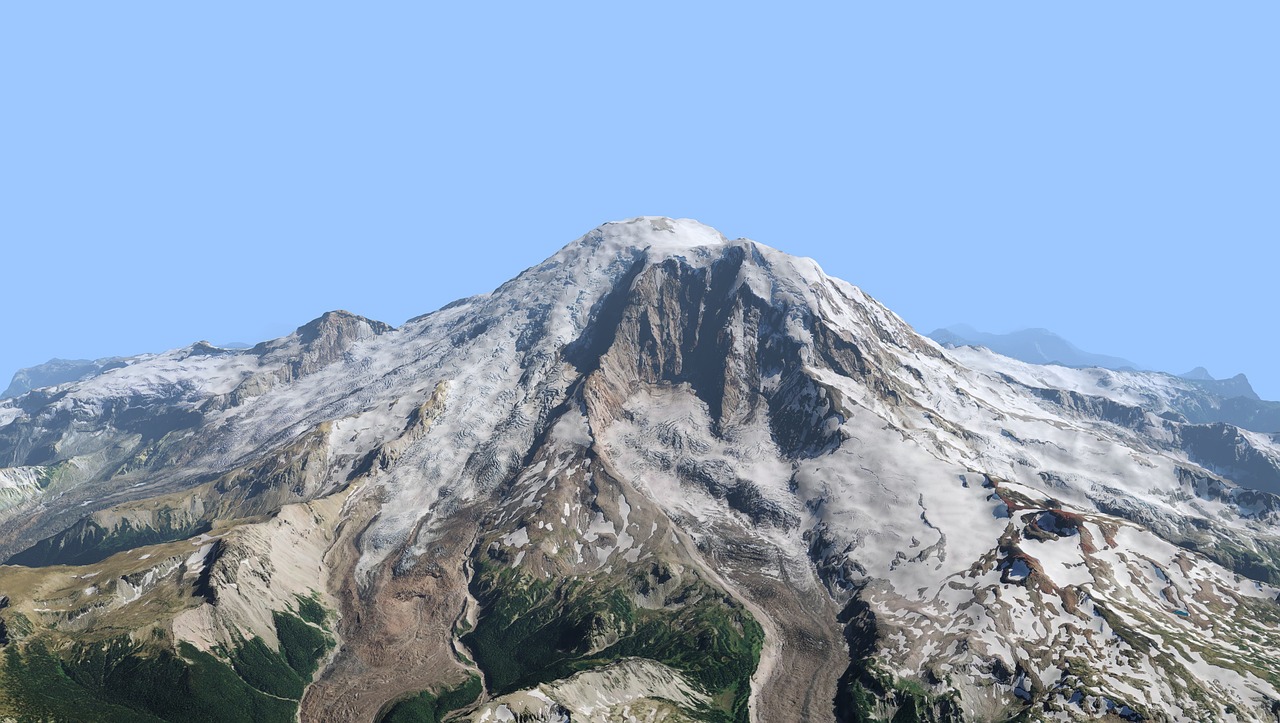
The Cascadia Subduction Zone, a colossal fault line stretching over 1,000 kilometers from northern California to British Columbia, represents one of North America's most significant natural hazards. For centuries, this sleeping giant has accumulated immense stress, threatening to unleash a magnitude 9.0+ "megaquake" that could devastate coastal communities along the Pacific Northwest. While traditional seismology has provided invaluable insights into the Earth's subterranean mechanics, the precise prediction of earthquakes remains an elusive goal. However, a new era is dawning, one where artificial intelligence (AI) is beginning to decipher the subtle "whispers" of the Earth, offering unprecedented hope in predicting these catastrophic events.

The Cascadia Subduction Zone, a roughly 1,000-kilometer-long offshore fault stretching from northern California to British Columbia, represents one of Earth's most significant seismic threats. Here, the Juan de Fuca tectonic plate grinds beneath the North American plate, accumulating immense stress that is periodically released in colossal magnitude 8 to 9+ megaquakes, often accompanied by devastating tsunamis. The last such event occurred in January 1700, leaving the Pacific Northwest vulnerable to a future 'Big One.' Traditionally, predicting earthquakes has been an elusive goal for seismologists, often likened to predicting individual lightning strikes. However, the advent of Artificial Intelligence (AI) and machine learning is rapidly transforming the field, offering unprecedented capabilities to sift through vast datasets and potentially discern the subtle 'whispers' of a brewing megaquake.
Overview: The Imperative of Cascadia
The Cascadia Subduction Zone is unique due to its relatively quiet seismic history of large-magnitude events in recorded human history, primarily evidenced by geological records and indigenous oral traditions. This lack of recent major quakes makes the potential for future events even more concerning, as stress continues to build. Unlike other subduction zones that experience frequent large earthquakes, Cascadia's locking mechanism appears to store energy over centuries. The challenge lies in identifying the precursory signals that might indicate an impending rupture. Traditional seismology has made significant strides in understanding fault mechanics and seismic wave propagation, but the sheer complexity and non-linear nature of earthquake processes often overwhelm conventional analytical methods. This is precisely where AI steps in, offering powerful pattern recognition capabilities that can potentially detect minute changes in Earth's crust that are imperceptible to human analysis alone.
Principles & Laws: The Seismological Foundation
Plate Tectonics and Subduction Dynamics
The fundamental principle governing Cascadia is plate tectonics. The oceanic Juan de Fuca plate, a remnant of the ancient Farallon plate, is actively subducting beneath the continental North American plate. This process creates a megathrust fault where the two plates interact. Friction along this interface causes the upper plate to deform and lock, accumulating elastic strain over hundreds of years. When the stress exceeds the fault's strength, the locked portion ruptures, causing a megaquake and the upper plate to instantaneously rebound seaward, displacing massive amounts of water and generating tsunamis.
Elastic Rebound Theory and Precursory Phenomena
The Elastic Rebound Theory, first articulated after the 1906 San Francisco earthquake, describes how rocks deform under stress and then rebound to their original shape when the stress is released. While conceptually simple, applying this to predict specific earthquake timings is incredibly difficult. Seismologists have long searched for reliable precursory phenomena – measurable physical changes in the Earth prior to an earthquake. These include changes in seismic wave velocities, ground deformation (measured by GPS or InSAR), variations in groundwater levels, gas emissions, and alterations in microseismicity patterns. Critically, in Cascadia, a unique phenomenon known as Episodic Tremor and Slip (ETS), or slow-slip events (SSEs), occurs every 12-18 months. These are long-duration, low-amplitude seismic tremors accompanied by slow, aseismic slip on the fault interface, occurring deeper than the locked zone. While not earthquakes themselves, they transfer stress to the shallower, locked portion of the fault, making them crucial indicators of Cascadia's stress state and potential catalysts for future ruptures.
Methods & Experiments: AI's Analytical Power
Data Acquisition and Feature Engineering
Modern seismic networks collect terabytes of data daily from an array of sensors: broadband seismometers, accelerometers, GPS stations, strain meters, and ocean-bottom seismometers (OBS). These instruments record ground motion, crustal deformation, and subtle vibrations. The challenge for AI lies in transforming this raw data into meaningful 'features' that a machine learning model can learn from. Feature engineering involves extracting parameters like waveform characteristics (amplitude, frequency content, phase changes), spatio-temporal clustering of events, changes in ambient seismic noise, and variations in GPS displacement vectors.
Machine Learning and Deep Learning Models
AI approaches to earthquake prediction in Cascadia primarily leverage supervised and unsupervised learning techniques:
- Supervised Learning: While direct megaquake training data is scarce due to their infrequency, supervised models can be trained on extensive datasets of smaller earthquakes or laboratory experiments simulating fault rupture. These models learn to classify seismic signals or identify patterns associated with known fault behaviors. For Cascadia, models might classify different types of tremor, distinguish true seismic events from noise, or categorize different phases of slow-slip events based on their geophysical signatures.
- Unsupervised Learning: This is particularly valuable for Cascadia where explicit labels for megaquake precursors are lacking. Unsupervised algorithms, such as clustering or anomaly detection, can identify unusual patterns in continuous seismic data, tremor, and geodetic measurements without prior knowledge of what constitutes a 'precursor.' For instance, an AI might detect novel spatio-temporal correlations between deep tremor and crustal deformation that traditional methods miss.
- Deep Learning: Convolutional Neural Networks (CNNs) excel at processing raw seismic waveforms directly, automatically learning hierarchical features without explicit feature engineering. Recurrent Neural Networks (RNNs), particularly LSTMs (Long Short-Term Memory networks), are adept at analyzing time-series data, making them ideal for modeling the temporal evolution of tremor, slow-slip events, and their interactions, potentially identifying critical transitions that precede instability.
- Physics-Informed AI: A cutting-edge approach integrates known physical laws (e.g., fault friction laws, wave propagation equations) directly into AI models. This ensures that the AI's predictions are not just statistically plausible but also physically consistent, addressing the 'black box' problem and enhancing trustworthiness.
Experimental Setups and Simulations
Researchers conduct controlled laboratory experiments on rock samples under high pressure and temperature to simulate fault behavior. AI is used to analyze the acoustic emissions and stress changes during these experiments, identifying microfracture patterns that could scale up to larger ruptures. Furthermore, advanced numerical simulations of the Cascadia fault system generate synthetic seismic data, which can then be used to train and validate AI models, providing a proxy for real-world megaquake data.
Data & Results: AI's Early Successes
AI has already demonstrated significant capabilities in specific aspects related to Cascadia's seismicity:

- Enhanced Tremor Detection: AI models can detect subtle, low-amplitude tremor signals in the Cascadia Subduction Zone with greater sensitivity and accuracy than traditional methods, revealing previously unseen patterns and expanding our understanding of the deep fault interface. This allows for a more complete map of slow-slip dynamics.
- Improved Earthquake Cataloging: AI-driven systems automatically pick P- and S-wave arrival times, locate small earthquakes, and characterize seismic events with unprecedented speed and precision, leading to richer, more detailed earthquake catalogs.
- Stress Field Inference: By analyzing continuous GPS data and ambient seismic noise, AI algorithms can infer changes in the crustal stress field and elastic properties. These changes might indicate stress loading or unlocking along the Cascadia megathrust, providing crucial insights into its readiness to rupture.
- Correlation with Slow-Slip Events: AI has uncovered subtle correlations between the spatial and temporal evolution of slow-slip events and changes in surrounding microseismicity, suggesting that SSEs may act as stress triggers or modulators for future ruptures in the locked zone.
While direct, deterministic prediction of a Cascadia megaquake remains elusive, AI's ability to reveal previously hidden patterns in geophysical data is fundamentally changing the way seismologists approach the problem, moving from a search for simple precursors to a complex understanding of interacting processes.
Applications & Innovations: Beyond Prediction
The applications of AI in Cascadia extend beyond pure prediction:
- Advanced Early Warning Systems: While AI cannot predict *when* a megaquake will strike, it can significantly enhance real-time earthquake early warning systems by rapidly processing initial seismic waves, estimating event magnitude and location more quickly, and thus providing precious seconds or tens of seconds of warning. For Cascadia, this could mean more accurate warnings for communities further inland as rupture propagates.
- Refined Probabilistic Hazard Assessment: AI can integrate diverse datasets (geological, seismic, geodetic) to improve probabilistic seismic hazard maps, offering more granular and dynamic risk assessments for urban planners, engineers, and emergency managers.
- Infrastructure Resilience: AI models can be trained to analyze the structural response of buildings and bridges during seismic events, potentially enabling real-time damage assessment and informing emergency response efforts more efficiently in the aftermath of an earthquake.
- Targeted Research: By highlighting specific regions or types of seismic activity that show anomalous behavior, AI can guide focused scientific investigation, directing resources to areas most likely to yield breakthrough insights into fault mechanics.
Key Figures and Collaborations
The field of AI in seismology is rapidly evolving, driven by interdisciplinary collaboration. Researchers from institutions like the University of Washington, Oregon State University, and the U.S. Geological Survey are at the forefront of applying machine learning to Cascadia data. Key figures include those specializing in slow-slip event research (e.g., Herb Dragert, John Vidale), seismic imaging, and the development of novel AI algorithms for geophysical data (e.g., Valérie Maupin, K.B. Smith, Mostafa Mousavi). Collaborative projects, often involving computer scientists and geophysicists, are crucial for leveraging computational power and domain expertise to tackle the Cascadia challenge.
Ethical & Societal Impact: Managing Expectations
The integration of AI into earthquake science carries significant ethical and societal implications. The public's perception of 'prediction' versus 'forecasting' or 'early warning' is critical. False alarms generated by AI could lead to panic, economic disruption, and erosion of public trust in scientific institutions. Conversely, a missed prediction could have catastrophic consequences. Scientists must communicate the capabilities and limitations of AI transparently, emphasizing that while AI enhances our understanding and preparedness, it is not a magic bullet for deterministic prediction. Policy makers will need to consider how AI-driven insights influence building codes, land-use planning, and emergency response protocols, ensuring that these advancements benefit all communities equitably.
Current Challenges: The Road Ahead
Despite AI's promise, several challenges remain:
- Data Scarcity for Megaquakes: The fundamental limitation for Cascadia remains the lack of directly observed megaquake precursors within a well-instrumented period. AI models thrive on large, diverse datasets, and this scarcity hinders direct learning of megaquake signals.
- Interpretability ('Black Box' Problem): Many powerful deep learning models are opaque, making it difficult for seismologists to understand *why* a particular prediction or pattern was identified. This lack of interpretability can hinder scientific understanding and trust in the model's output.
- Non-Stationarity of Earth Systems: Geological processes are inherently dynamic and non-stationary. Models trained on past data may not accurately reflect future conditions, especially as stress states evolve over centuries.
- Computational Demands: Processing and training AI models on continuous, high-resolution seismic data from dense sensor networks require immense computational resources.
- Validation and Ground Truthing: Verifying AI predictions or identified precursors for rare, large-magnitude events like Cascadia megaquakes is extremely challenging without the actual event occurring.
Future Directions: Pushing the Boundaries
The future of AI in Cascadia seismology is bright, with several promising directions:
- Hybrid Physics-AI Models: Integrating physics-based models (which encode fundamental understanding of rock mechanics) with data-driven AI models will lead to more robust, interpretable, and physically consistent predictions.
- Real-time Learning and Adaptive Systems: Developing AI systems that continuously learn and adapt in real-time from new incoming data streams, dynamically updating their understanding of Cascadia's evolving stress state.
- Multi-modal Data Fusion: Combining seismic, geodetic (GPS, InSAR), hydrological, and even satellite gravimetry data into comprehensive AI models to capture a more holistic view of crustal deformation and fluid migration.
- Distributed Computing and Edge AI: Deploying AI algorithms closer to sensor networks (edge computing) can reduce data transfer bottlenecks and enable faster, more localized analysis.
- Global Data Sharing and Transfer Learning: Applying AI models trained on data from more active subduction zones (e.g., Japan, Chile) to Cascadia (transfer learning) can help overcome the data scarcity issue, albeit with careful consideration of geological differences.
Conclusion: A New Era of Seismic Understanding
AI is not a crystal ball for earthquake prediction, but it represents a powerful new lens through which seismologists can examine the intricate workings of the Cascadia Subduction Zone. By augmenting human analytical capabilities, AI is revealing subtle patterns in vast geophysical datasets, enhancing our understanding of slow-slip events, stress accumulation, and potential precursory signals. While the 'Big One' remains an inevitability, AI promises to significantly improve our ability to characterize its likelihood, refine early warning systems, and strengthen the resilience of communities across the Pacific Northwest. As the seismic whisperers become clearer, humanity moves closer to coexisting more safely with Earth's dynamic forces, transforming the daunting challenge of earthquake risk into an opportunity for scientific innovation and societal preparedness.